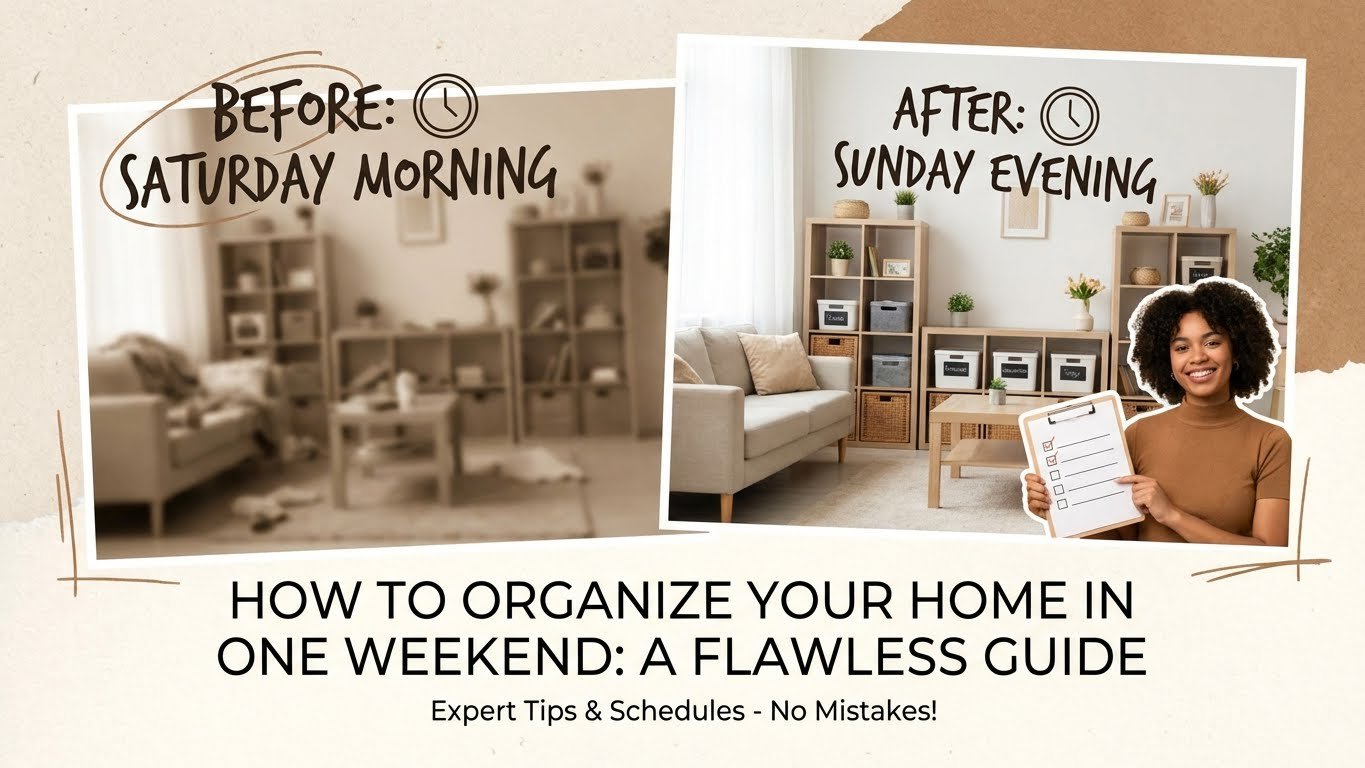
Feeling overwhelmed by clutter and disorganization in your living space? You’re not alone. Many of us struggle to maintain a tidy home, but the good news is that you can achieve a more organized and peaceful living environment in just one weekend.
With a clear home organization plan, you can declutter fast and make significant progress toward your goal. This involves prioritizing tasks, focusing on high-impact areas, and using effective strategies to keep your belongings in order.
By dedicating a single weekend to this task, you can reap the benefits of a more organized home, including reduced stress and increased productivity. Our step-by-step guide will walk you through the process, providing you with tidy home tips and practical advice to help you get started.
Key Takeaways
- Learn how to create a effective home organization plan
- Discover strategies for decluttering quickly and efficiently
- Understand the importance of maintaining a tidy home
- Get practical tips for organizing your living space
- Achieve a more peaceful and productive living environment
The Power of a Weekend Transformation
A cluttered home can feel overwhelming, but dedicating a weekend to organization can be a game-changer. Many of us struggle with maintaining a tidy and organized living space, often due to busy schedules and the daunting task of decluttering. However, with a focused approach, it’s possible to transform your home in just a weekend.
Why Most Organization Attempts Fail
Most organization attempts fail because they lack a clear plan and are often undertaken in a piecemeal manner. Without a concentrated effort, it’s easy to get bogged down in the task and lose momentum. Additionally, many people try to tackle too much at once, leading to burnout.
Some common pitfalls include:
- Lack of clear goals
- Insufficient time allocation
- Poor sorting and categorization
Benefits of the Concentrated Weekend Approach
Dedicating a weekend to home decluttering and organization offers several benefits. It allows for a focused effort, enabling you to make significant progress in a short amount of time. This approach also helps in:
- Creating a clear plan and sticking to it
- Making quick decisions about what to keep and what to discard
- Avoiding the burnout that can come from prolonged decluttering efforts
By adopting a weekend makeover approach, you can achieve a more organized home with less stress. With organization tips and a bit of determination, you can enjoy the benefits of a clutter-free living space.
Essential Supplies for Your Organization Weekend
A successful organization weekend starts with the right tools and supplies. Having the necessary materials on hand will make the task less daunting and more efficient.
Storage Containers and Organizational Tools
Investing in the right storage containers and organizational tools is crucial. Consider using clear plastic bins for storing items you want to keep, as they allow you to see the contents easily. Labelled baskets and bins can also help in categorizing and accessing items quickly. Shelving units and stackable containers can maximize storage space in closets and garages.
Cleaning Supplies Checklist
A thorough cleaning often accompanies organization. Prepare a checklist that includes all-purpose cleaners, disinfectants, dusters, and vacuum cleaners. Don’t forget microfiber cloths for dusting and polishing surfaces. Having these supplies ready will streamline your cleaning process.
Labels and Organizational Aids
Labels are a simple yet effective way to maintain your newly organized space. Use a label maker to clearly mark storage containers and shelves. Other organizational aids include adhesive hooks for hanging items, cord organizers for managing cables, and drawer dividers for keeping utensils and supplies in order.
By gathering these essential supplies, you’ll be well-prepared to tackle your organization project and achieve a more streamlined, clutter-free home.
Friday Night: Setting Yourself Up for Success
To ensure a productive organization weekend, it’s essential to start by setting yourself up for success on Friday night. This initial step is crucial in laying the groundwork for the tasks ahead.
Creating Your Room-by-Room Action Plan
Begin by walking through your home and identifying areas that need the most attention. Create a room-by-room action plan that outlines specific tasks for each space. This plan will serve as your roadmap for the weekend, helping you stay focused and on track.
Preparing Sorting Stations
Next, prepare sorting stations by gathering boxes, bins, or bags labeled for different categories such as “keep,” “donate,” “sell,” and “discard.” Having these stations ready will streamline your decluttering process and make decision-making easier.
Setting Realistic Goals for Each Space
It’s also important to set realistic goals for each area of your home. Be honest about what you can accomplish in the time you have, and prioritize tasks based on importance and urgency. By doing so, you’ll avoid feeling overwhelmed and make steady progress throughout the weekend.
By following these steps on Friday night, you’ll be well-prepared to tackle your organization tasks with clarity and confidence.
The 15-Minute Power Decluttering Method
Transform your space in no time with the simple yet effective 15-minute power decluttering method. This technique is designed to help you quickly declutter any area of your home by focusing on short, manageable intervals. The beauty of this method lies in its simplicity and the momentum it builds.
The Four-Box Sorting System
The cornerstone of the 15-minute power decluttering method is the four-box sorting system. Label four boxes as “Keep,” “Donate,” “Sell,” and “Toss.” As you declutter, sort items into these categories. This system helps you make quick decisions about what to do with each item.
- Keep: Items you use regularly or have significant sentimental value.
- Donate: Items that are still in good condition but no longer needed.
- Sell: Items of value that you no longer need or use.
- Toss: Items that are broken or no longer useful.
Decision-Making Shortcuts
Making decisions is a crucial part of decluttering. To simplify this process, ask yourself: “When was the last time I used this?” or “Does it have sentimental value?” If the answer is no, it’s likely safe to let it go.
“You don’t have to be great to start, but you have to start to be great.” – Zig Ziglar
Overcoming Emotional Attachments to Items
It’s common to feel emotionally attached to certain items. To overcome this, consider taking a photo of the item as a way to preserve the memory without keeping the physical object. This can be a powerful way to let go while still honoring the memory.
| Item | Decision | Action |
| Old clothes | Donate/Sell | Sort into donate or sell piles based on condition. |
| Broken appliances | Toss | Dispose of properly. |
Saturday Morning (8am-12pm): Bedrooms and Closets
Begin your Saturday by focusing on your bedroom and closet, turning them into havens of relaxation. A clutter-free bedroom not only enhances the aesthetic appeal of your home but also contributes to a restful night’s sleep.
Closet Organization by Category
Organizing your closet by category is an effective way to ensure that everything has its place. Start by sorting clothes into groups such as tops, bottoms, dresses, and outerwear. Use double rods to maximize hanging space and consider shoe racks or over-the-door organizers for additional storage.
As Professional Organizer, Julie Morgenstern once said, “A cluttered space is a reflection of a cluttered mind.” By categorizing your belongings, you can create a more streamlined and functional closet.
Dresser Drawer Systems
Implementing a dresser drawer system can significantly enhance your bedroom’s organization. Use drawer dividers to separate different types of clothing, such as socks, underwear, and t-shirts. Consider a drawer organizer kit for a more customized approach.
- Sort clothes into categories before placing them in drawers.
- Utilize dividers to keep items separated and easy to find.
- Keep frequently worn items at the front of the drawer for easy access.
Nightstand and Under-Bed Solutions
Nightstands and under-bed areas offer additional storage opportunities. Use nightstand organizers or under-bed storage bins to keep items like linens, out-of-season clothes, or personal items out of the way but still accessible.
| Storage Solution | Description | Benefits |
| Under-bed storage bins | Plastic or fabric bins that fit under the bed | Keeps items out of the way but accessible |
| Nightstand organizers | Drawers or trays that fit inside nightstands | Enhances organization and reduces clutter |
By implementing these strategies, you can transform your bedroom and closet into organized, relaxing spaces that enhance your overall well-being.
Saturday Afternoon (1pm-5pm): Bathrooms and Laundry Areas
With the weekend transformation in full swing, dedicating Saturday afternoon to organizing bathrooms and laundry rooms can make a significant difference. This focused effort will help create a more functional and relaxing environment in these critical areas of your home.
Bathroom Cabinet and Counter Organization
Start by clearing out your bathroom cabinets and counters. Remove everything and sort items into categories, such as toiletries, medications, and personal care products. Use storage containers and baskets to keep similar items together and make the most of your cabinet space.
Linen Closet Arrangement
A well-organized linen closet can enhance the overall feel of your bathroom. Use shelving units or stackable shelves to maximize storage. Store linens, towels, and toiletries in labeled bins to keep the area tidy and make items easy to find.
| Area | Organization Tips |
| Bathroom Cabinets | Use baskets and containers to store toiletries and personal care items. |
| Linen Closet | Utilize shelving units and labeled bins for linens and towels. |
| Laundry Room | Implement a sorting system and use wall-mounted storage for supplies. |
Laundry Room Efficiency Systems
To optimize your laundry room, consider implementing a sorting system for clothes and linens. Use wall-mounted storage for laundry supplies to keep the floor clear and make the space more efficient.
By focusing on these areas on Saturday afternoon, you’ll be able to enjoy a more organized and functional bathroom and laundry area by the end of the weekend.
Saturday Evening (6pm-9pm): Living Spaces
As the day unwinds on Saturday, it’s time to transform your living spaces into cozy, clutter-free areas that invite relaxation and entertainment. This involves tackling various elements, from entertainment centers to furniture arrangement, to create a harmonious and functional space.
Entertainment Center and Media Organization
Begin by organizing your entertainment center. Sort through DVDs, CDs, and gaming consoles, keeping only what you regularly use. Consider investing in a media console with storage to keep items out of sight. Use cable organizers to manage cords and cables, reducing clutter and making it easier to switch between devices.
Bookshelf and Display Arrangement
Next, focus on your bookshelves and display areas. Remove any items that don’t belong or are no longer needed. Organize books by genre, author, or color to create a visually pleasing arrangement. For decorative items, group similar objects together and leave some space between them to avoid a cluttered look.
Furniture Decluttering and Rearrangement
Decluttering and rearranging furniture can significantly impact the feel of your living space. Start by removing any unnecessary items from the room, such as old magazines or remote controls. Then, consider the layout of your furniture. Arrange seating to facilitate conversation and ensure that pathways are clear. If necessary, swap out furniture or add decorative pieces to enhance the room’s ambiance.
Some key tips for living room organization include:
- Keep frequently used items accessible.
- Use storage solutions like baskets or bins for clutter.
- Consider the flow of the room when arranging furniture.
- Regularly review and adjust your organization systems.
By following these steps, you can create a living space that is not only organized but also inviting and comfortable for relaxation and entertainment.
Creating a Complete Home Organization Plan That Lasts
Maintaining your newly organized home is just as important as the initial decluttering process. To ensure your space remains tidy and organized, implementing a maintenance plan is crucial. This involves creating routines that fit into your daily, weekly, and monthly schedule.
Daily 10-Minute Maintenance Routines
Starting with daily routines can make a significant difference. Allocate 10 minutes each day to tidying up. This could involve putting away dishes after dinner, wiping down kitchen counters, or quickly picking up toys and clutter. Consistency is key to making this a habit.
Weekly Zone-Cleaning Schedule
Divide your home into zones and assign a day of the week to focus on each zone. For example, Mondays could be for the living room, Tuesdays for the bedrooms, and so on. This approach ensures that every area of your home receives attention without feeling overwhelmed.
Monthly Refresh Strategies
On a monthly basis, take some time to refresh your space. This could mean reorganizing a cluttered area, deep cleaning a room, or simply reassessing your belongings to ensure they still serve a purpose. Monthly refreshes help maintain the organization and functionality of your home.
By incorporating these daily, weekly, and monthly routines into your home organization plan, you’ll be able to maintain your space effectively. This not only reduces stress but also creates a more enjoyable living environment.
Sunday Morning (8am-12pm): Kitchen and Dining Areas
Sunday morning is the perfect time to tackle the heart of your home: the kitchen and dining areas. Organizing these spaces can significantly enhance your cooking experience and mealtime enjoyment. A well-organized kitchen is not just about aesthetics; it’s about creating a functional space that makes meal preparation and cleanup more efficient.
Pantry Organization by Zones
Start by organizing your pantry into zones. Divide the space into categories such as baking supplies, canned goods, and snacks. Use stackable containers and adjustable shelving to maximize storage. Label each zone clearly so that everyone in the household knows where things go.
Cabinet and Drawer Systems
Next, focus on your kitchen cabinets and drawers. Implement drawer dividers to keep utensils and cooking tools organized. For cabinets, consider using turntables and stackable shelves to make the most of the space. This will help you access items easily and prevent clutter from building up.
Appliance and Countertop Arrangement
Finally, arrange your appliances and countertops for maximum efficiency. Designate a specific area for frequently used appliances and keep countertops clear of clutter. Consider using a countertop organizer or appliance garage to keep essentials within easy reach while maintaining a clean look.
By following these steps, you can transform your kitchen and dining areas into organized, functional spaces that make cooking and dining a pleasure. With a little effort on Sunday morning, you’ll set yourself up for a week of stress-free meal preparation and enjoyable family time.
Sunday Afternoon (1pm-5pm): Home Office and Paperwork
The final leg of our organization journey involves transforming your home office into a productive workspace. A well-organized home office is crucial for managing paperwork and enhancing productivity.
To achieve this, we’ll focus on three key areas: paper management systems, digital file organization, and workspace arrangement for productivity.
Paper Management Systems
Effective paper management is the backbone of a organized home office. Start by sorting papers into categories, such as bills, receipts, and documents that need to be filed. Use a filing cabinet or a paper tray to keep important documents organized and easily accessible. Consider implementing a touch once rule, where you deal with each piece of paper as soon as you touch it, either by filing it, tossing it, or acting on it.
Digital File Organization
In today’s digital age, organizing your digital files is just as important as managing paperwork. Create clear and descriptive folder names, and use cloud storage services like Google Drive or Dropbox to back up your files. Ensure that your computer files are organized in a logical manner, making it easy to find what you need when you need it.
Workspace Arrangement for Productivity
A well-arranged workspace can significantly boost your productivity. Ensure your desk is clear of clutter, and position your chair and computer in a way that promotes good posture. Use ergonomic accessories like a standing desk or a document holder to enhance your working experience. Keep frequently used items within easy reach to minimize distractions.
By implementing these strategies, you’ll be able to create a home office that is not only organized but also conducive to productivity.
Sunday Evening (6pm-9pm): Storage Areas and Finishing Touches
As Sunday evening approaches, it’s time to tackle the often-neglected storage areas of your home. Organizing these spaces can make a significant difference in maintaining your newly organized home.
Garage, Basement, or Attic Organization
Start by clearing out any clutter or debris from your storage areas. Use storage bins and containers to keep items off the floor and labeled for easy identification. Consider installing shelving or a pegboard to maximize vertical space.
- Sort items into categories (e.g., tools, seasonal decorations, out-of-season clothing).
- Assign a home for each category using storage solutions.
- Keep frequently used items accessible and store less frequently used items in harder-to-reach areas.
Seasonal Item Storage Solutions
When storing seasonal items, consider using vacuum-sealed bags to save space and protect against moisture. Label each bag or container so you can easily find what you need next season.
Some tips for storing seasonal items include:
- Store items in a dry, cool area to prevent damage.
- Use stackable containers to maximize storage space.
- Keep a list of stored items and their locations for easy reference.
Final Home Walk-Through and Adjustments
Once you’ve organized your storage areas, take a final walk-through of your home to ensure everything is in order. Make any necessary adjustments to maintain your newly organized space.
By following these steps, you’ll be able to enjoy your newly organized home and maintain it with ease.
Conclusion: Enjoying and Maintaining Your Organized Home
Now that you’ve invested a weekend in organizing your home, it’s time to enjoy the benefits and maintain your newly organized space. Maintaining organization is key to ensuring your home remains a relaxing and functional living environment.
To keep your home organized, establish a routine that includes daily 10-minute maintenance tasks and a weekly zone-cleaning schedule. This will help you stay on top of clutter and keep your home looking its best. You can also implement home maintenance tips such as regularly reviewing your belongings and getting rid of items that are no longer needed.
Enjoying your home is just as important as organizing it. Take time to appreciate the beauty and functionality of your newly organized space. Whether it’s hosting dinner parties or simply relaxing in a clutter-free environment, your organized home is now a haven where you can unwind and recharge.
By following these simple tips, you can maintain your organized home and continue to enjoy the benefits of a clutter-free living space. With a little effort, you can keep your home organized, functional, and beautiful for years to come.
FAQ
What is the best way to start organizing my home?
Begin by creating a room-by-room action plan, setting realistic goals for each space, and preparing sorting stations to help you stay focused and on track.
How do I decide what to keep and what to discard?
Use the four-box sorting system: label boxes as “Keep,” “Donate,” “Sell,” and “Toss.” Be ruthless – if you haven’t used it in the past year, it’s likely you won’t miss it. Consider the 15-minute power decluttering method to make decisions quickly.
What are the essential supplies I need for home organization?
You’ll need storage containers, cleaning supplies, labels, and organizational aids like baskets, bins, and dividers. Make sure to have a label maker and labels on hand to keep items clearly identified.
How can I maintain my newly organized home?
Establish daily 10-minute maintenance routines, a weekly zone-cleaning schedule, and monthly refresh strategies to keep your home tidy and organized over time.
What are some tips for organizing my kitchen and dining areas?
Organize your pantry by zones, implement cabinet and drawer systems, and arrange appliances and countertops for maximum efficiency. Consider using a kitchen cart or island to add extra storage and counter space.
How can I keep my home office and paperwork organized?
Set up paper management systems, organize digital files, and arrange your workspace to enhance productivity. Consider using a file cabinet, desk organizers, and a paper tray to keep paperwork under control.
What are some strategies for organizing storage areas like garages, basements, and attics?
Use storage bins, baskets, and containers to keep items off the floor and out of the way. Label items clearly, and consider installing shelving or storage units to maximize space. Store seasonal items in labeled bins and keep frequently used items accessible.
How long will it take to organize my entire home?
With a focused approach, you can organize your home in just one weekend. However, maintaining your newly organized home will require ongoing effort and commitment to daily, weekly, and monthly routines.