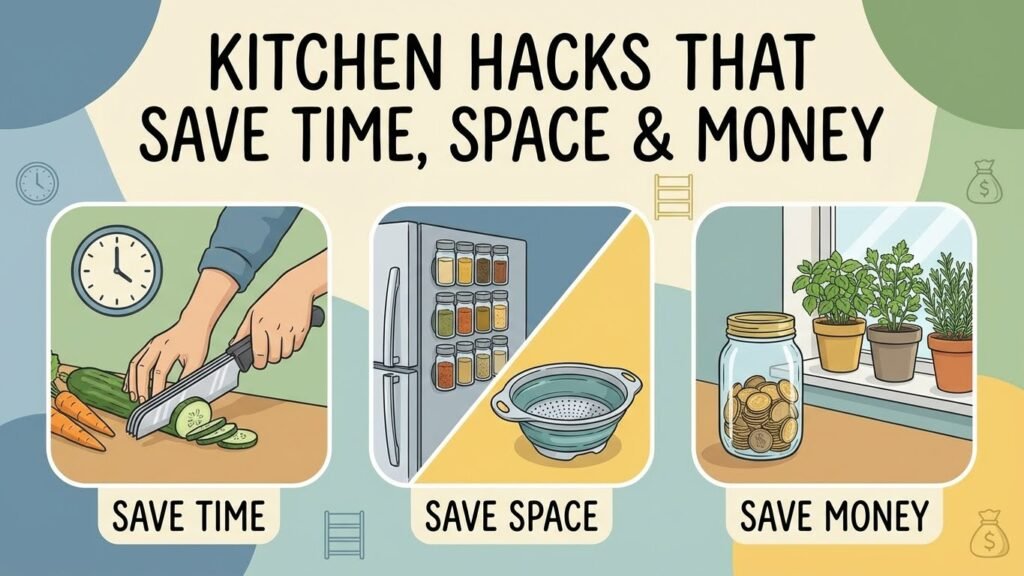
Are you tired of feeling like your kitchen is a chaotic mess? With a few simple kitchen tips, you can transform your space into a haven of efficiency and productivity.
From clever cooking shortcuts to smart storage solutions, we’ll explore the most effective kitchen hacks to save you time, space, and money. By implementing these practical strategies, you’ll be able to optimize your kitchen experience and make meal prep a breeze.
Key Takeaways
- Discover simple ways to optimize your kitchen space
- Learn clever cooking shortcuts to save time
- Explore budget-friendly kitchen solutions
- Improve your meal prep efficiency with practical tips
- Transform your kitchen into a productive haven
Essential Kitchen Hacks for Everyday Efficiency
Simple kitchen hacks can make a significant difference in your daily cooking routine. By implementing a few clever strategies, you can enhance your cooking efficiency and overall kitchen productivity.
Quick Preparation Techniques
One of the most effective ways to boost kitchen efficiency is by mastering quick preparation techniques. For instance, chopping vegetables in advance and storing them in airtight containers can save you a considerable amount of time during meal prep. Consider using a mandoline for uniform cuts or a food processor for chopping large quantities.
Another technique is to prepare ingredients for multiple meals at once. This approach not only streamlines your cooking process but also helps in reducing food waste.
Streamlining Cooking Processes
Streamlining your cooking processes can be achieved by simplifying meal preparation and cooking methods. One-pot meals and sheet pan dinners are excellent examples of how to minimize cleanup while maximizing flavor. These methods allow you to cook a complete meal with minimal supervision, freeing up your time for other tasks.
| Meal Type | Cooking Method | Cleanup Effort |
| One-Pot Meals | Single pot cooking | Low |
| Sheet Pan Dinners | Cooking on a single pan | Low |
| Multi-Course Meals | Multiple pots and pans | High |
Cleanup Shortcuts
Cleanup is an inevitable part of cooking, but there are shortcuts to make it more manageable. For example, soaking dishes immediately after a meal can prevent food from hardening, making the cleaning process easier. Additionally, using a dishwasher can significantly reduce manual cleanup efforts.
Another effective strategy is to clean as you go. This involves washing utensils and pots immediately after use, wiping down surfaces, and disposing of trash. By doing so, you can maintain a tidy kitchen with minimal effort at the end of the meal.
Smart Kitchen Organization Strategies
A well-organized kitchen is the backbone of efficient cooking, and implementing smart kitchen organization strategies can significantly enhance your culinary experience. By optimizing your kitchen’s layout and storage, you can streamline your cooking process, reduce clutter, and make meal preparation more enjoyable.
Zone-Based Organization Systems
One effective way to organize your kitchen is by creating zone-based systems. This involves dividing your kitchen into different areas, each dedicated to a specific task or activity.
Cooking Zone Optimization
Optimizing your cooking zone involves ensuring that all the essentials, such as pots, pans, utensils, and ingredients, are within easy reach. This can be achieved by installing a pot rack or a utensil organizer near your stovetop.
Prep Area Efficiency
Your prep area should be designed to facilitate easy food preparation. Consider using a kitchen cart or island with built-in storage for your prep tools and ingredients.
Vertical Storage Solutions
Maximizing your kitchen’s vertical space can significantly enhance storage capacity. Consider installing wall-mounted shelves, hooks, or a pegboard to hang utensils, pots, and pans.
Decluttering Methods That Last
Decluttering your kitchen regularly is crucial to maintaining a organized space. Implement a “one in, one out” policy to prevent clutter from building up again. As Marie Kondo once said, “The purpose of a kitchen is not just to cook, but to create a space that sparks joy.”
“A cluttered kitchen is a sign of a cluttered mind.” -Unknown
By implementing these smart kitchen organization strategies, you’ll be able to create a more efficient, enjoyable cooking environment that makes meal preparation a breeze.
Time-Saving Cooking Shortcuts
Cooking doesn’t have to be a time-consuming task; with a few simple strategies, you can prepare delicious meals quickly. By implementing these time-saving cooking shortcuts, you’ll be able to enjoy home-cooked meals without spending hours in the kitchen.
Batch Cooking Fundamentals
Batch cooking involves preparing large quantities of food at once, which can then be reheated as needed. This method is not only time-efficient but also cost-effective, as it reduces food waste and saves on energy bills. To get started with batch cooking, choose a day when you have a few hours free, and prepare meals for the next few days.
Tips for successful batch cooking:
- Plan your meals in advance to ensure you’re preparing dishes that freeze well or can be reheated easily.
- Invest in a good set of storage containers to keep your cooked meals fresh.
- Label and date your containers so you know what you have and how long it’s been stored.
One-Pot and Sheet Pan Meal Ideas
One-pot meals and sheet pan dinners are perfect for busy weeknights. These methods simplify cooking and reduce cleanup, making them ideal for those who want to cook efficiently. Some popular one-pot meals include pasta dishes, stews, and risottos, while sheet pan meals can feature a variety of roasted vegetables and proteins.
Strategic Appliance Usage
Using the right appliances at the right time can significantly reduce cooking time. Two appliances that are particularly useful for saving time are pressure cookers and slow cookers.
Pressure Cooker Techniques
Pressure cookers can cook food up to 70% faster than traditional methods, making them a valuable tool for busy cooks. They’re perfect for cooking beans, grains, and tougher cuts of meat. To get the most out of your pressure cooker, follow these tips:
- Always follow the manufacturer’s instructions for cooking times and liquid ratios.
- Use the quick release feature when appropriate to stop the cooking process.
Slow Cooker Strategies
Slow cookers are ideal for cooking meals that simmer all day, resulting in tender, flavorful dishes. To use your slow cooker effectively, plan your meals around ingredients that benefit from long, slow cooking, such as pot roasts and stews.
| Cooking Method | Time Saved | Example Meals |
| Batch Cooking | Up to 5 hours per week | Casseroles, soups, stews |
| One-Pot Meals | 30 minutes per meal | Pasta dishes, risottos, skillet dinners |
| Pressure Cooking | Up to 70% faster | Beans, grains, tough cuts of meat |
| Slow Cooking | Hands-off cooking all day | Pot roasts, stews, chili |
Budget-Friendly Kitchen Solutions
You can have an efficient and economical kitchen without overspending. By implementing a few simple strategies, you can save money and make your kitchen more functional.
DIY Kitchen Tools and Cleaners
One of the easiest ways to save money in the kitchen is by making your own cleaning solutions and tools. For example, you can create an all-purpose cleaner using equal parts water and white vinegar. Additionally, you can repurpose old items like mason jars and cloth napkins to reduce waste and save on disposable products.
Smart Ingredient Substitutions
Making smart ingredient substitutions is another way to reduce kitchen expenses. For instance, you can substitute expensive ingredients with more affordable alternatives, such as using canned tomatoes instead of fresh tomatoes during off-seasons. Being mindful of what’s in your pantry and fridge can also help reduce food waste and save you money.
Extending Food Shelf Life
Proper food storage is crucial for extending the shelf life of your groceries. Using airtight containers, keeping your fridge at the right temperature, and understanding the “first-in, first-out” rule can significantly reduce food waste. By adopting these simple practices, you can enjoy your groceries for longer and save money on your grocery bills.
By incorporating these budget-friendly kitchen solutions into your daily routine, you can enjoy a more efficient, cost-effective kitchen that meets your needs without breaking the bank.
Maximizing Small Kitchen Spaces
To make the most of a compact kitchen, it’s essential to utilize space-efficient solutions. This involves adopting a combination of strategies that enhance both functionality and aesthetics.
Multi-Purpose Furniture and Tools
Investing in multi-purpose furniture and tools is a game-changer for small kitchens. For instance, a kitchen cart with storage can serve as additional counter space and a place to store utensils and ingredients. Similarly, a pot rack can be both a storage solution and a decorative element.
Wall and Ceiling Storage Options
Utilizing wall and ceiling space can significantly increase storage capacity. Installing shelves, hooks, or a pegboard on walls can keep frequently used items within easy reach. Ceiling-mounted storage racks are perfect for storing infrequently used items, keeping them out of the way yet accessible.
Under-Cabinet and Drawer Organization
Optimizing under-cabinet and drawer space is crucial. Using dividers, baskets, or slide-out trays can help organize kitchen utensils, cookware, and food items efficiently. This not only saves space but also makes it easier to find what you need.
| Storage Solution | Description | Benefits |
| Multi-purpose Furniture | Kitchen carts, island with storage | Additional counter space, storage for utensils and ingredients |
| Wall and Ceiling Storage | Shelves, hooks, pegboard, ceiling racks | Increased storage, keeps items within reach or stored away |
| Under-Cabinet and Drawer Organization | Dividers, baskets, slide-out trays | Efficient organization, easy access to items |
By implementing these strategies, you can transform your small kitchen into a highly functional and organized space, enhancing your overall cooking experience.
Repurposing Kitchen Items to Save Money
Repurposing kitchen items is a clever way to save money and reduce waste. By giving new life to old or discarded items, you can cut down on unnecessary purchases and create a more efficient kitchen.
New Uses for Common Utensils
Many common kitchen utensils can be repurposed for other uses. For example, a muffin tin can be used to organize small items like beads, buttons, or even spices. A wooden spoon can be used as a plant label in your garden. As Emily Henderson, a renowned interior designer, once said, “The key to a functional kitchen is to think creatively about the items you already own.”
Other examples include using a colander as a steamer basket or a fruit holder, and repurposing old cutting boards as serving trays or coasters.
Upcycling Food Containers
Food containers like jars, bottles, and cartons can be upcycled into useful storage containers or decorative items. For instance, old mason jars can be used as vases, pen holders, or storage containers for dry goods. As apartment therapy suggests, “Cleaning and reusing containers is not only eco-friendly but also a great way to add a personal touch to your kitchen.”
DIY Kitchen Upgrades
Repurposing kitchen items can also involve DIY upgrades. Refinishing old cabinets, creating a kitchen island from an old dresser, or turning an old ladder into a pot rack are just a few examples. According to
“The most successful DIY projects are those that breathe new life into old, forgotten items.” -DIY Network
By adopting these strategies, you can save money, reduce waste, and create a more functional and personalized kitchen.
Food Storage Innovations
Effective food storage is crucial for maintaining kitchen efficiency and reducing waste. By implementing the right strategies, you can keep your food fresh for longer and make the most of your kitchen space.
Extending Produce Freshness
One of the key challenges in food storage is keeping produce fresh. This can be achieved through various methods tailored to different types of fruits and vegetables.
Fruit Storage Solutions
For fruits like apples and bananas, storing them in a cool, dry place or in the refrigerator can extend their freshness. Some fruits, like berries, are best stored in a container that allows for airflow.
Vegetable Preservation Techniques
Vegetables such as carrots and potatoes can be stored in a root cellar or a cool, dark place. Leafy greens, on the other hand, are best kept in the refrigerator with proper humidity control.
| Produce | Storage Method | Expected Freshness Duration |
| Apples | Cool, dry place or refrigerator | Up to 6 months |
| Berries | Container with airflow in refrigerator | Up to 1 week |
| Carrots | Root cellar or cool, dark place | Up to 2 months |
Smart Refrigerator Organization
Organizing your refrigerator efficiently can also contribute to food storage innovations. Using storage bins and baskets can help categorize and easily access your food items.
Pantry Storage Systems
A well-organized pantry is essential for maximizing storage capacity. Using shelf dividers, baskets, and clear containers can help keep your pantry tidy and make the most of the available space.
By implementing these food storage innovations, you can enjoy fresher produce, reduce waste, and create a more efficient kitchen.
Quick Cleaning Hacks for Busy Kitchens
A clean kitchen is the heart of a happy home, and with these quick cleaning hacks, it’s achievable. Keeping your kitchen clean and hygienic doesn’t have to be a daunting task. By implementing a few simple strategies, you can maintain a spotless kitchen with minimal effort.
Daily Maintenance Routines
Establishing a daily routine is crucial for maintaining a clean kitchen. Simple tasks like wiping down countertops after meals, putting away utensils and ingredients immediately after use, and sweeping or vacuuming the floor can make a significant difference.
- Wipe down countertops and sinks after every meal.
- Clean as you go to avoid clutter and mess.
- Sweep or vacuum the floor daily to prevent crumbs and dust buildup.
Natural Cleaning Solutions
Using natural cleaning solutions is not only eco-friendly but also effective. You can make your own cleaners using common household ingredients like baking soda, vinegar, and lemon juice.
Some simple recipes include:
- Mixing baking soda and water to create a paste for tackling tough stains.
- Using equal parts water and white vinegar in a spray bottle for a multi-surface cleaner.
- Combining lemon juice and salt for a natural scrub.
Tackling Tough Kitchen Messes
Despite our best efforts, tough messes can still occur. For stubborn stains, grout, and grease, using the right cleaning techniques and products can make all the difference.
- For tough stains, apply a paste made from baking soda and water, let it sit, and then scrub.
- Use a mixture of vinegar and baking soda to clean grout lines.
- Degrease surfaces with a solution of equal parts water and white vinegar.
By incorporating these quick cleaning hacks into your daily routine, you can maintain a clean, hygienic, and welcoming kitchen with minimal effort.
Energy-Efficient Cooking to Reduce Utility Bills
Energy-efficient cooking is a simple yet effective way to lower your utility bills and minimize your environmental footprint. By adopting a few straightforward strategies, you can make a significant impact on your energy consumption.
Minimizing Appliance Energy Usage
One of the most effective ways to reduce energy consumption is by minimizing appliance energy usage. This can be achieved by turning off appliances when not in use and using energy-efficient cookware. For instance, using a microwave or toaster oven for smaller meals instead of the full-sized oven can save a considerable amount of energy.
Water Conservation Techniques
Water conservation is another crucial aspect of energy-efficient cooking. Using a water-efficient dishwasher and fixing leaks can significantly reduce water waste. Additionally, adopting practices like soaking dishes instead of letting the water run can make a difference.
Smart Cooking Methods
Smart cooking methods, such as cooking with lids on pots and pans, can help retain heat and reduce cooking time. Using residual heat by turning off the stove or oven a few minutes before finishing cooking can also save energy. As the U.S. Department of Energy suggests, “cooking with lids on pots and pans can reduce cooking time and energy consumption.”
“Cooking with lids on pots and pans can reduce cooking time and energy consumption.”U.S. Department of Energy
By implementing these energy-efficient cooking strategies, you can significantly reduce your utility bills and contribute to a more sustainable kitchen environment.
Strategic Meal Planning for Time and Money Savings
Strategic meal planning can significantly reduce kitchen time and expenses. By planning meals in advance, individuals can avoid last-minute takeouts and reduce food waste.
Shopping List Optimization
Optimizing your shopping list is a crucial step in meal planning. This involves planning meals around sales and using coupons to save money. For instance, if your local grocery store is offering a discount on chicken breasts, you can plan meals that feature chicken as the main protein.
- Check weekly ads for your local grocery stores
- Plan meals around sale items
- Use digital coupons or apps for additional savings
Seasonal Cooking Advantages
Cooking with seasonal ingredients not only ensures freshness but also reduces costs. Produce that is in season is often cheaper and tastes better. According to a study by the United States Department of Agriculture (USDA), buying in season can save consumers up to 30% on their grocery bills.
“Eating seasonally is a simple way to eat healthier, save money, and support local farmers.” -USDA
Bulk Preparation Strategies
Bulk preparation is a time-saving strategy that involves cooking large quantities of a single ingredient or meal. This can be particularly useful for meals that freeze well.
Freezer-Friendly Meal Prep
Freezer-friendly meals are a great way to save time during the week. Meals like soups, casseroles, and individual portions can be frozen and reheated as needed.
Portioning for Efficiency
Portioning meals into individual servings can enhance kitchen productivity. It allows for quick grab-and-go meals, reducing the time spent on meal preparation during busy days.
| Meal Type | Freezer Life | Reheating Time |
| Casseroles | 3-4 months | 20-30 minutes |
| Soups | 4-6 months | 10-20 minutes |
| Individual portions | 2-3 months | 5-10 minutes |
By implementing these strategic meal planning strategies, individuals can save time, reduce expenses, and enhance their overall kitchen productivity.
Digital Tools for Kitchen Management
In today’s digital age, managing your kitchen efficiently is just a few taps away. With a myriad of digital tools available, home cooks can now simplify meal planning, grocery shopping, and recipe organization.
Meal Planning Apps and Services
Meal planning apps like Plan to Eat and Yummly allow users to organize recipes, create meal plans, and generate grocery lists. These services help in reducing food waste and saving time during meal preparation.
- Meal planning customization: Many apps offer customization based on dietary preferences and ingredient availability.
- Integration with grocery delivery services: Some meal planning apps integrate with grocery delivery services, making shopping easier.
Grocery Savings Tools
Digital coupons and cashback apps like Ibotta and Fetch Rewards offer savings on grocery purchases. These tools help in reducing grocery bills and can be used in conjunction with meal planning apps.
- Digital coupons: Browse and add coupons directly to your loyalty cards.
- Cashback offers: Earn money back on your grocery purchases.
Recipe Organization Systems
Digital recipe books and meal planning software like Paprika Recipe Manager help in organizing recipes and planning meals around them. These tools ensure that your favorite recipes are easily accessible and can be scaled based on the number of servings needed.
By leveraging these digital tools, home cooks can streamline their kitchen management, saving time and reducing stress during meal preparation.
Conclusion: Creating a More Efficient and Economical Kitchen
By implementing the kitchen hacks and strategies discussed in this article, you can create a kitchen that is both functional and budget-friendly. Focusing on kitchen efficiency, you can optimize your cooking processes, reduce waste, and save time. Simple changes, such as streamlining your cooking techniques and utilizing smart kitchen organization, can significantly impact your kitchen economy.
Embracing these kitchen hacks will help you enjoy a more streamlined kitchen experience. With a few adjustments, you can maximize your kitchen’s potential, making meal preparation and cleanup more manageable. By prioritizing kitchen efficiency, you’ll be able to cook more effectively, reduce energy consumption, and create a more enjoyable cooking environment.
By integrating these practical tips into your daily routine, you’ll be well on your way to achieving a more efficient and economical kitchen that meets your needs and enhances your cooking experience.
FAQ
What are some simple kitchen hacks to save time?
Some simple kitchen hacks to save time include meal prep, one-pot meals, and using a pressure cooker or slow cooker. You can also save time by chopping vegetables in advance and storing them in airtight containers.
How can I optimize my kitchen storage?
To optimize your kitchen storage, consider using vertical storage solutions, such as wall-mounted shelves or a pegboard. You can also use under-cabinet storage and drawer organizers to maximize your kitchen’s storage capacity.
What are some budget-friendly kitchen solutions?
Some budget-friendly kitchen solutions include DIY kitchen tools and cleaners, smart ingredient substitutions, and extending food shelf life. You can also save money by repurposing kitchen items, such as turning old jars into planters or storage containers.
How can I reduce food waste in my kitchen?
To reduce food waste in your kitchen, consider implementing strategies such as meal planning, using up leftovers, and storing food properly. You can also use up food before it expires by incorporating it into your meals or freezing it for later use.
What are some energy-efficient cooking methods?
Some energy-efficient cooking methods include cooking with lids, using residual heat, and turning off appliances when not in use. You can also save energy by using energy-efficient cookware and minimizing appliance energy usage.
How can I keep my kitchen clean with minimal effort?
To keep your kitchen clean with minimal effort, consider implementing daily maintenance routines, such as wiping down countertops and cleaning up spills immediately. You can also use natural cleaning solutions, such as baking soda and vinegar, to clean your kitchen.
What are some digital tools that can help me manage my kitchen?
Some digital tools that can help you manage your kitchen include meal planning apps, grocery savings tools, and recipe organization systems. You can use these tools to plan meals, create grocery lists, and organize recipes, making it easier to manage your kitchen.
How can I maximize my small kitchen space?
To maximize your small kitchen space, consider using multi-purpose furniture and tools, such as a kitchen island or a cart with storage. You can also use wall and ceiling storage options, such as shelves or a pegboard, to maximize your kitchen’s vertical space.